
About Sake
Japanese sake is a poetic expression of earth, water, time, and devotion. Born from the union of pure water and humble rice. Sake is a whisper from the past, echoing centuries of tradition in every drop.
There are many different flavor profiles and breweries to explore. Learning about all the varieties of sake and what makes them unique will help guide your way to find your favorite sake and how best to enjoy it.
Learn More on Youtube

What is Sake?
Lorem ipsum dolor sit amet, consectetuer adipiscing elit, sed diam.
Video Title 2
Lorem ipsum dolor sit amet, consectetuer adipiscing elit, sed diam.
Video Title 3
Lorem ipsum dolor sit amet, consectetuer adipiscing elit, sed diam.
Wine and sake are both fermented beverages. They are not distilled spirits like Korean Soju or Japanese Shochu. These fermented beverages have deep cultural roots, refined craftsmanship, and a strong connection to food. Though they share similarities, their ingredients, production methods, and flavor profiles reflect unique traditions — one from the vineyards of Europe, the other from the rice fields of Japan.
Compared to wine, sake is exceptionally food-friendly and pairs well with a wide range of cuisines beyond Japanese dishes. While sake generally has lower overall acidity than wine, certain acids—such as succinic acid and lactic acid—are higher in sake. These acids, which are also found in shellfish and dairy, work with sake’s umami flavor to enhance foods such as seafood, mushrooms, cheese, soy-based sauces, and cured meats.
Sake also pairs well with spicy foods, often better than wine. Wine’s higher tannins and acidity can intensify the heat and bitterness of spicy dishes, whereas sake’s umami-rich profile and moderate sweetness help balance the spice and complement the flavors.
Generally, sake is gluten-free and vegan, with no preservatives or additives, making it a cleaner and more natural choice than many other alcoholic beverages.
The table below outlines a comparison of the key ingredients and production method of wine and sake:
View PDF table that outlines a comparison of the key ingredients and production method of wine and sake
Wine and sake are both fermented beverages. They are not distilled spirits like Korean Soju or Japanese Shochu. These fermented beverages have deep cultural roots, refined craftsmanship, and a strong connection to food. Though they share similarities, their ingredients, production methods, and flavor profiles reflect unique traditions — one from the vineyards of Europe, the other from the rice fields of Japan.
Compared to wine, sake is exceptionally food-friendly and pairs well with a wide range of cuisines beyond Japanese dishes. While sake generally has lower overall acidity than wine, certain acids—such as succinic acid and lactic acid—are higher in sake. These acids, which are also found in shellfish and dairy, work with sake’s umami flavor to enhance foods such as seafood, mushrooms, cheese, soy-based sauces, and cured meats.
Sake also pairs well with spicy foods, often better than wine. Wine’s higher tannins and acidity can intensify the heat and bitterness of spicy dishes, whereas sake’s umami-rich profile and moderate sweetness help balance the spice and complement the flavors.
Generally, sake is gluten-free and vegan, with no preservatives or additives, making it a cleaner and more natural choice than many other alcoholic beverages.
The table below outlines a comparison of the key ingredients and production method of wine and sake:
View PDF table that outlines a comparison of the key ingredients and production method of wine and sake
Some sake labels state brewing methods such as Kimoto or Yamahai. These traditional and semi-traditional brewing methods using natural lactic acid starters, produce rich, full-bodied, and umami driven sake. For more information about these brewing method styles, refer to “How It’s Made” section.
There are also specialty styles such as sparkling sake, Nigori (cloudy) sake, fruit-infused sake, and Koshu (aged sake). These unique types are a fun and approachable way for beginners to explore the world of sake.
Rice Varieties
Different rice varieties have different grain size, starch concentration, and protein/fat content. As such, rice can contribute greatly to the sake structure, mouthfeel, sweetness or dryness perception, aromatic balance and aftertaste (finish length and clarity). Sake made from soft rice like Yamada Nishiki and Omachi tend to be round, aromatic, and silky in texture. Whereas sake made from hard rice such as Gohyakumangoku and Miyama Nishiki, display clean, crisp, dry and precise flavors.
Sake made from heirloom rice such as Omachi, Aiyama, and Kamenoo can display more earthy, umami-rich, deep and wild notes. Even with the same rice variety, flavors of sake can differ based on other influencing factors such as polishing ratios, water hardness, yeast strain, fermentation temperature, and brewer’s technique. But knowing the flavor profile of different rice varieties will be helpful in deciding which sake to buy.
Sake is often compared to wine but its production process is closer to beer, since both involve two major steps converting starch to sugar first and then sugar to alcohol.
Pure rice sake (Junmai type sake) is made by polishing and steaming rice, adding koji mold to convert starch into sugar (saccharification), fermenting it with yeast through a brewing method called multiple parallel fermentation, then pressing, filtering, and bottling the final sake. A small amount of alcohol is added for Non-Junmai type sake.
Premium sakes can be made in different brewing methods. The more modern method of sake brewing is called “Sokujo” meaning “quick brewing.” In this method, commercialized lactic acid is added directly to the yeast starter (called moto in Japan) instead of allowing it to form naturally. This method shortens the yeast starter-making time from about four weeks to one, while reducing the risk of spoilage. More sake are made using this modern method, resulting in a more refined style. If the label does not specify, it most likely means that it is made by this modern method.
Kimoto is the oldest traditional method of preparing the yeast starter (moto), developed over 300 years ago. Brewers manually mix and grind steamed rice, koji, and water (yamaoroshi) to encourage the natural growth of lactic acid bacteria. This lactic acid protects the yeast from unwanted microbes and creates a strong fermentation base. Sakes made with this traditional method lead to artisanal sake unique to each producer. Kimoto sake often have full-bodied, rich and complex tasting notes with deep umami and well-balanced acidity. Complex flavors include earthy, nutty, sometimes slightly funky or yogurt-like. Aged Kimoto can show caramelized or savory depth. Kimoto sake can be paired beautifully with western dishes. Kimoto sake command premium price as it requires extensive manually labor of mixing and grinding rice mash.
Yamahai is a more modern version of Kimoto, developed in the early 1900s. “Yamahai” stands for yamaoroshi haishi — meaning “no need to grind the mash.” Brewers skip the hand-stirring step, but like Kimoto, natural lactic acid bacteria are allowed to develop without adding artificial acid. Yamahai sake are typically made in a more full and rustic style with bold, gamey, tangy flavors with higher acidity and pronounced umami.
Sake Meter Value (SMV) is one of the most useful indicators when understanding how dry or sweet a sake is in a scientific way. SMV measures the gravity and density of sake compared to water, reflecting how much sugar and alcohol are remained in the finished sake. Higher SMV (positive number) means sake is lighter and drier. Lower SMV (negative number) means sake is sweeter and richer.
However, SMV alone does not indicate how sweet a sake actually tastes. Perceived sweetness or dryness of sake also depends on other factors such as acidity and umami levels and serving temperature. For example, higher acidity makes sake taste drier. Umami adds richness and softens dryness. Chilling emphasizes dryness and warmth softens it.
Wine and sake are both fermented beverages. They are not distilled spirits like Korean Soju or Japanese Shochu. These fermented beverages have deep cultural roots, refined craftsmanship, and a strong connection to food. Though they share similarities, their ingredients, production methods, and flavor profiles reflect unique traditions — one from the vineyards of Europe, the other from the rice fields of Japan.
Compared to wine, sake is exceptionally food-friendly and pairs well with a wide range of cuisines beyond Japanese dishes. While sake generally has lower overall acidity than wine, certain acids—such as succinic acid and lactic acid—are higher in sake. These acids, which are also found in shellfish and dairy, work with sake’s umami flavor to enhance foods such as seafood, mushrooms, cheese, soy-based sauces, and cured meats.
Sake also pairs well with spicy foods, often better than wine. Wine’s higher tannins and acidity can intensify the heat and bitterness of spicy dishes, whereas sake’s umami-rich profile and moderate sweetness help balance the spice and complement the flavors.
Generally, sake is gluten-free and vegan, with no preservatives or additives, making it a cleaner and more natural choice than many other alcoholic beverages.
The table below outlines a comparison of the key ingredients and production method of wine and sake:
Some sake labels state brewing methods such as Kimoto or Yamahai. These traditional and semi-traditional brewing methods using natural lactic acid starters, produce rich, full-bodied, and umami driven sake. For more information about these brewing method styles, refer to “How It’s Made” section.
There are also specialty styles such as sparkling sake, Nigori (cloudy) sake, fruit-infused sake, and Koshu (aged sake). These unique types are a fun and approachable way for beginners to explore the world of sake.
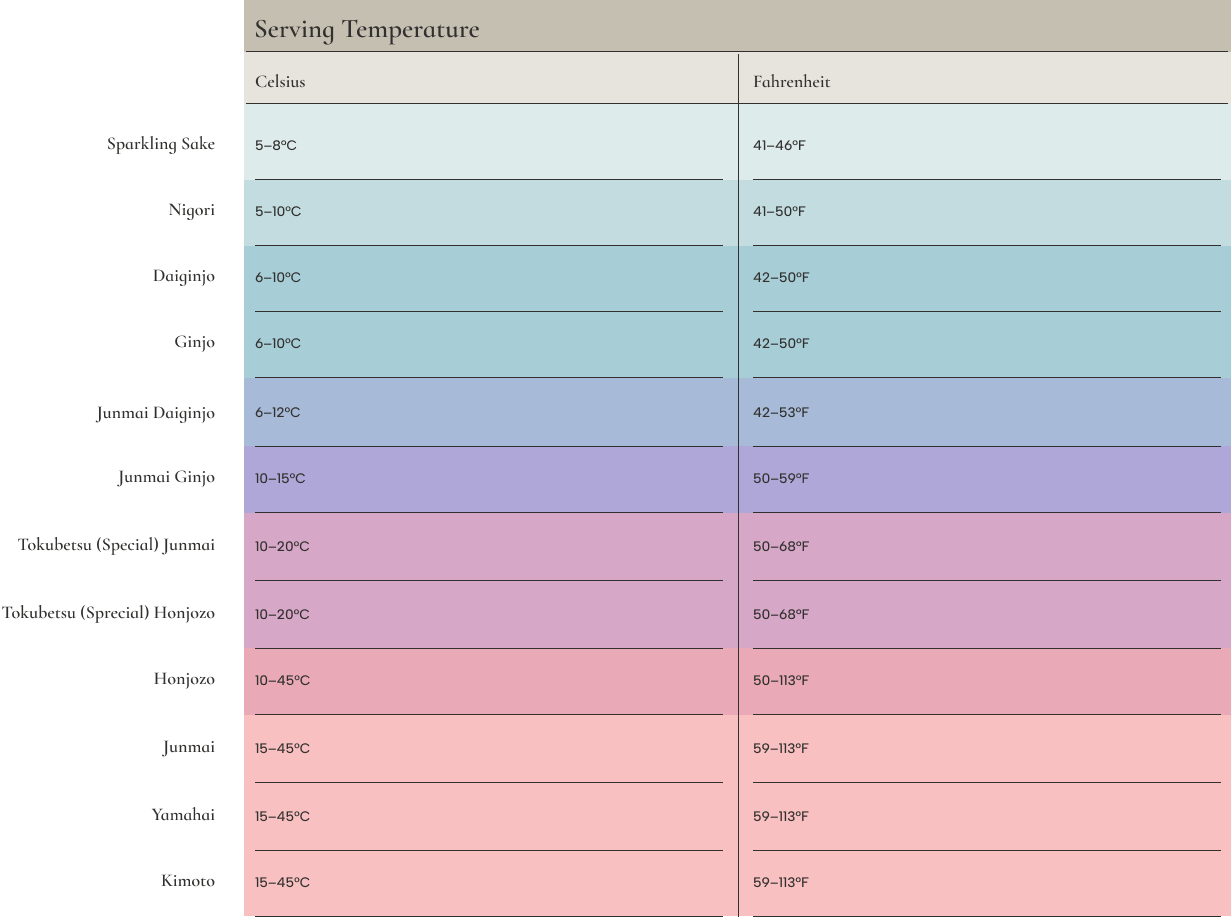
Tips to Savor Your Sake to the Fullest
Different rice varieties have different grain size, starch concentration, and protein/fat content. As such, rice can contribute greatly to the sake structure, mouthfeel, sweetness or dryness perception, aromatic balance and aftertaste (finish length and clarity). Sake made from soft rice like Yamada Nishiki and Omachi tend to be round, aromatic, and silky in texture. Whereas sake made from hard rice such as Gohyakumangoku and Miyama Nishiki, display clean, crisp, dry and precise flavors.
Sake made from heirloom rice such as Omachi, Aiyama, and Kamenoo can display more earthy, umami-rich, deep and wild notes. Even with the same rice variety, flavors of sake can differ based on other influencing factors such as polishing ratios, water hardness, yeast strain, fermentation temperature, and brewer’s technique. But knowing the flavor profile of different rice varieties will be helpful in deciding which sake to buy.
- Nama (unpasteurized), highly polished premium sakes (Daiginjo, Junmai Daiginjo, Ginjo, Junmai Ginjo) and other speciality sakes such as sparkling, Nigori, or fruit-infused sake: store in the refrigerator.
- Other premium sakes (Junmai, Honjozo): Can be kept in a cool, dark place (50–59°F), but to be safe, refrigeration is recommended for all sake.
- Once opened, store in the refrigerator and consume within 5–7 days for the best flavor.
- Store bottles upright to protect the seal.
- Aging: Most sake is best enjoyed within 1–2 years, except Koshu (aged sake), which is intentionally aged for added complexity.